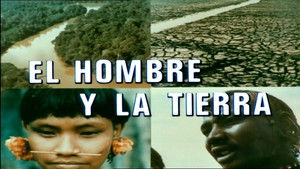
Man and the Earth Episode Rating Graph
Mar 1974 - Jun 1981
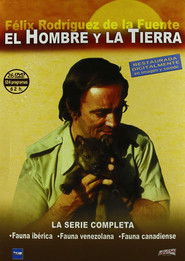
Mar 1974 - Jun 1981
6.2

| E1 | E2 | E3 | E4 | E5 | E6 | E7 | E8 | E9 | E10 | E11 | E12 | E13 | E14 | E15 | E16 | E17 | E18 | E19 | E20 | E21 | E22 | E23 | E24 | E25 | E26 | E27 | E28 | E29 | E30 | E31 | E32 | E33 | E34 | E35 | E36 | E37 | E38 | E39 | E40 | E41 | E42 | E43 | E44 | E45 | E46 | E47 | E48 | E49 | E50 | E51 | E52 | E53 | E54 | E55 | E56 | E57 | E58 | E59 | E60 | E61 | E62 | E63 | E64 | E65 | E66 | E67 | E68 | E69 | E70 | E71 | E72 | E73 | E74 | E75 | E76 | E77 | E78 | E79 | E80 | E81 | E82 | E83 | E84 | E85 | E86 | E87 | E88 | E89 | E90 | E91 | E92 | |
|---|---|---|---|---|---|---|---|---|---|---|---|---|---|---|---|---|---|---|---|---|---|---|---|---|---|---|---|---|---|---|---|---|---|---|---|---|---|---|---|---|---|---|---|---|---|---|---|---|---|---|---|---|---|---|---|---|---|---|---|---|---|---|---|---|---|---|---|---|---|---|---|---|---|---|---|---|---|---|---|---|---|---|---|---|---|---|---|---|---|---|---|---|
| S1 | ||||||||||||||||||||||||||||||||||||||||||||||||||||||||||||||||||||||||||||||||||||||||||||
| S2 | ||||||||||||||||||||||||||||||||||||||||||||||||||||||||||||||||||||||||||||||||||||||||||||
| S3 |
Browse episode ratings trends for Man and the Earth. Simply click on the interactive rating graph to explore the best and worst of Man and the Earth's 124 episodes.

S3 Ep14
10.0
20th Jun 1981
In the first part of the thousand-mile race, we saw how the start and each stage are organized. Here we will see how Félix follows the arrival of the first finishers. Man and the Earth will cover the stages with images of spectacular beauty captured by two cameras.

S3 Ep13
10.0
13th Jun 1981
This time, Man and the Earth travels to a remote corner of the planet. Alaska awaits us, but it is not its legendary bears or its bald eagles that our cameras are after. It is a sled dog race covering half the peninsula in the middle of winter.

S3 Ep12
10.0
7th Mar 1980
The adventure through Nahanni National Park begins with a descent down this river aboard two powerful steel boats with jet engines, the only safe means of reaching the famous Virginia Falls.

S3 Ep11
10.0
28th Feb 1980
The trappers of Canada have become famous worldwide through the stories of novelist Jack London: their primitive life in the wild territories, their knowledge of the wildlife and climate, their independence, and their hospitality.

S3 Ep10
10.0
22nd Feb 1980
In the month of November, a large part of Canada is covered in snow. The Man and the Earth crew, flying through a snowstorm, travels to the Arctic tundra to film the winter migration of the caribou and the bison heading toward more sheltered prairies.

S3 Ep9
10.0
15th Feb 1980
In the last days of autumn, nearly all the lakes, rivers, and lagoons of northern Canada are already frozen over. As a result, some American white-tailed eagles, or bald eagles, are unable to fish to feed themselves.

S3 Ep8
10.0
8th Feb 1980
One of the most important animals of northern Canada is the caribou. This large cervid, which feeds mainly on lichens, was the foundation of survival for the Inuit and the Indians of the great north.

S3 Ep7
10.0
25th Jan 1980
The Man and the Earth crew travels to the Canadian national park of Pacific Rim, on Vancouver Island, to film the gray whales, which today attract great attention from scientists and wildlife and nature conservationists alike.

S3 Ep6
10.0
18th Jan 1980
In Canada, extremely favorable circumstances have come together for the survival of wildlife. First, colonization came late. The harsh winter climate limited the activities of hunters and trappers. The government enacted legal measures to protect wildlife.

S3 Ep5
10.0
11th Jan 1980
After traveling more than 50,000 kilometers across Canada, the Man and the Earth crew goes in search of beavers to observe their habits. A rodent that appears on the national flag's coat of arms alongside a maple leaf. Beavers are known for their ability to fell and cut trees with their teeth.

S3 Ep4
10.0
4th Jan 1980
The peregrine falcon is one of Félix Rodríguez de la Fuente's favorite animals, and he dedicated an episode of the Canadian shoot to filming this center where more than 300 birds have been bred.

S3 Ep3
10.0
28th Dec 1979
On July 4, 1979, the first Canadian expedition begins to produce the first report from the interior of Kluane Park. After spending the night at a lake, the crew sets out to reach the high glaciers, the main attraction of the area.

S3 Ep2
10.0
21st Dec 1979
In 1971, a deep frozen cavern was discovered on a cliff face in Nahanni National Park, which was named the Valeria Grotto. At a depth of eight hundred meters, perfectly preserved skeletons were found.

S3 Ep1
10.0
14th Dec 1979
The first unit of the Man and the Earth crew explores the Canadian wilderness all the way to Virginia Falls. 250 kilometers across Nahanni National Park. Over three stages they travel to the falls, accompanied by an invasion of mosquitoes, for which they are equipped with special masks and gloves to ensure the expedition does not fail.

S2 Ep38
10.0
3rd Jan 1978
These birds, belonging to the order Piciformes, build their nests by drilling into wood. Among woodpeckers, some are practically omnivorous, such as the great spotted woodpecker. Others, like the green woodpecker, feed on wood-boring larvae and ants, using their extremely long protractile tongue.

S1 Ep1
1.0
4th Mar 1974
During the spring of 1973, a TVE crew, in close collaboration with several Venezuelan government agencies, produced a series of 18 ecological documentaries under the general title of Man and the Earth.
S2 Ep3
5.0
24th Oct 1975
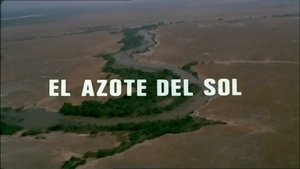
In the animal community of the Mediterranean forest, small herbivores, plant-eating animals such as mice, garden dormice, rats, squirrels, and rabbits, are abundant. Their populations are kept in check by small and medium-sized predators, extremely useful ones, such as weasels, polecats, genets, and foxes: the little killers.

S2 Ep1
8.0
10th Oct 1975
The life of the red deer, from birth to maturity.

S1 Ep2
10.0
11th Mar 1974
The show's crew undertakes a rescue operation for the animals most affected by the heat and drought.
S1 Ep3
10.0
18th Mar 1974
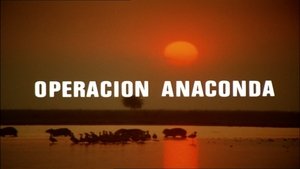
During a rescue operation, the crew captures gigantic anacondas, caimans, and tortoises to prevent them from dying of dehydration.
S1 Ep4
10.0
25th Mar 1974
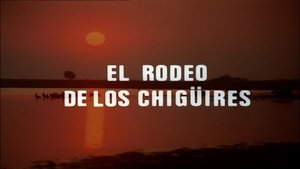
The animals most affected by the tremendous drought plaguing the plains of Venezuela are the chigüires, or capybaras, rodents weighing up to 50 kilograms. Capybaras are part of a relict population that must have been extremely prosperous in South America before the uplift of the Isthmus of Panama allowed modern mammals to enter the isolated sanctuary of South American wildlife. The Man and the Earth crew conducts a study on the zoogeographical history, as well as the ecology and behavior of these fascinating rodents.
S1 Ep5
10.0
10th Apr 1974
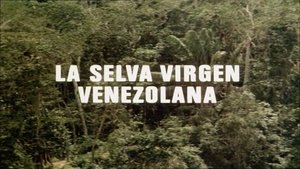
The largest forest mass on our planet spans the immense Orinoco–Amazon basin. Under a perpetually humid climate, the giants of the jungle grow to heights exceeding 60 meters.
S1 Ep6
10.0
17th Apr 1974
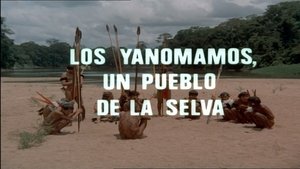
In the deciduous jungles lining the banks of the Upper Orinoco and its tributaries lives a Paleo-Indian tribe that has only very recently come into contact with civilization: the Yanomami, one of the few truly free peoples remaining in the world today.
S1 Ep7
10.0
18th May 1974
Félix Rodríguez de la Fuente and his crew navigate the Orinoco, where they encounter the Yanomami. A people of the Venezuelan jungle who, despite having no knowledge of mathematical laws, build perfect bridges based on their thorough understanding of every type of wood in the jungle. A people of the forest who avoided the great rivers because, according to their traditions, that was where the great dangers lay. An adventure on the banks of the Orinoco River.
S1 Ep8
10.0
25th May 1974
The largest and most powerful of South American carnivores is the jaguar. Once abundant, the Man and the Earth crew had to travel thousands of kilometers deep into the jungle to discover the last strongholds of this great predator.
S1 Ep9
10.0
8th Jun 1974
One of the most distinctive traits of the Yanomami is their warlike behavior.
S1 Ep10
10.0
11th Jun 1974
After spending a season with the Yanomami, the Man and the Earth crew is guided by some of these indigenous people deeper into the jungle, where the native hunters make camp during their summer nomadic wanderings.
S1 Ep11
10.0
16th Jun 1974
The giant otter, or water dog as it is known in South America, is one of the most beautiful, fascinating, and little-known animals in the world.
S1 Ep12
10.0
22nd Jun 1974
South of Puerto Ayacucho, the vertical and inviolate mass of Cerro Autana rises, the sacred mountain of the Piaroa people.
S1 Ep13
10.0
6th Jul 1974
The Man and the Earth crew shows us the Llanos of Venezuela, one of the largest and least known regions on the planet.
S1 Ep1
1.0
4th Mar 1974
During the spring of 1973, a TVE crew, in close collaboration with several Venezuelan government agencies, produced a series of 18 ecological documentaries under the general title of Man and the Earth.

S1 Ep2
10.0
11th Mar 1974
The show's crew undertakes a rescue operation for the animals most affected by the heat and drought.

S1 Ep3
10.0
18th Mar 1974
During a rescue operation, the crew captures gigantic anacondas, caimans, and tortoises to prevent them from dying of dehydration.

S1 Ep4
10.0
25th Mar 1974
The animals most affected by the tremendous drought plaguing the plains of Venezuela are the chigüires, or capybaras, rodents weighing up to 50 kilograms. Capybaras are part of a relict population that must have been extremely prosperous in South America before the uplift of the Isthmus of Panama allowed modern mammals to enter the isolated sanctuary of South American wildlife. The Man and the Earth crew conducts a study on the zoogeographical history, as well as the ecology and behavior of these fascinating rodents.

S1 Ep5
10.0
10th Apr 1974
The largest forest mass on our planet spans the immense Orinoco–Amazon basin. Under a perpetually humid climate, the giants of the jungle grow to heights exceeding 60 meters.

S1 Ep6
10.0
17th Apr 1974
In the deciduous jungles lining the banks of the Upper Orinoco and its tributaries lives a Paleo-Indian tribe that has only very recently come into contact with civilization: the Yanomami, one of the few truly free peoples remaining in the world today.

S1 Ep7
10.0
18th May 1974
Félix Rodríguez de la Fuente and his crew navigate the Orinoco, where they encounter the Yanomami. A people of the Venezuelan jungle who, despite having no knowledge of mathematical laws, build perfect bridges based on their thorough understanding of every type of wood in the jungle. A people of the forest who avoided the great rivers because, according to their traditions, that was where the great dangers lay. An adventure on the banks of the Orinoco River.

S1 Ep8
10.0
25th May 1974
The largest and most powerful of South American carnivores is the jaguar. Once abundant, the Man and the Earth crew had to travel thousands of kilometers deep into the jungle to discover the last strongholds of this great predator.

S1 Ep9
10.0
8th Jun 1974
One of the most distinctive traits of the Yanomami is their warlike behavior.

S1 Ep10
10.0
11th Jun 1974
After spending a season with the Yanomami, the Man and the Earth crew is guided by some of these indigenous people deeper into the jungle, where the native hunters make camp during their summer nomadic wanderings.

S1 Ep11
10.0
16th Jun 1974
The giant otter, or water dog as it is known in South America, is one of the most beautiful, fascinating, and little-known animals in the world.

S1 Ep12
10.0
22nd Jun 1974
South of Puerto Ayacucho, the vertical and inviolate mass of Cerro Autana rises, the sacred mountain of the Piaroa people.

S1 Ep13
10.0
6th Jul 1974
The Man and the Earth crew shows us the Llanos of Venezuela, one of the largest and least known regions on the planet.

S1 Ep14
10.0
13th Jul 1974
South America is a paradise for birds, known by scientists as the "continent of birds." The Republic of Venezuela alone is home to more bird species than the entire European continent.
S1 Ep15
10.0
20th Jul 1974
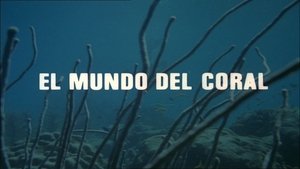
The Man and the Earth crew, joined on this occasion by underwater and surface filmmakers, captures on camera an entire world of coral that forms the subject of this episode.
S1 Ep16
10.0
30th Jul 1974
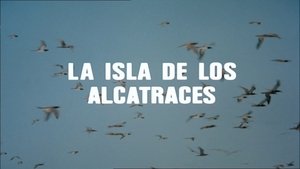
On a flat islet covered with glasswort, in the middle of the Venezuelan Coral Sea, brown boobies nest. The reproductive biology of this immense colony is the subject of this episode of Man and the Earth. For a European, explains Félix Rodríguez de la Fuente, "someone accustomed to animals fearing his presence, the most surprising thing is the calm with which these boobies welcome these new 'animals.'"
S1 Ep17
10.0
5th Jul 1974
At the small river port of La Esmeralda, the Man and the Earth crew finds a six-month-old giant otter that had been literally torn from the belly of its dead mother and was being raised by a native to be sold at one year of age to fur buyers.

S1 Ep18
10.0
12th Aug 1974
Dr. Rodríguez de la Fuente concludes the expedition across Venezuela and returns to Spain with the giant otter rescued from death in Puerto Ayacucho (La Esmeralda). They are accompanied by another otter, a sibling of the first, also rescued from death.
Loading...
The first episode of Man and the Earth aired on March 04, 1974.
The last episode of Man and the Earth aired on June 20, 1981.
There are 124 episodes of Man and the Earth.
There are 3 seasons of Man and the Earth.
No.
Man and the Earth has ended.